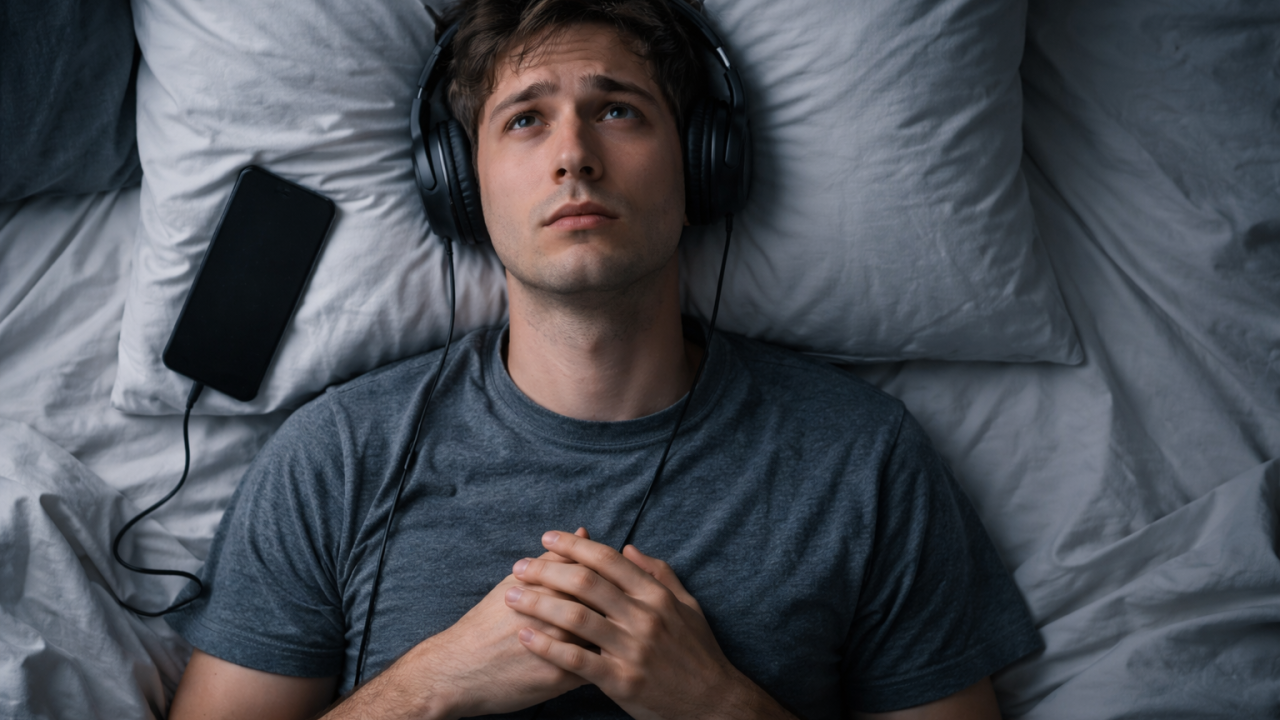
On the surface, it seems irrational. If you are sad, why would you deliberately choose music that makes you sadder? Why not prescribe yourself something bright, energetic, reassuring –– the musical equivalent of sunshine and fresh air?
Yet most people do the opposite. When grief strikes, they reach for songs of loss. When lonely, they seek voices that sound lonely. When heartbroken, they do not queue up celebration –– they press play on someone else’s heartbreak.
This is not masochism. It is recognition.
The need to be understood
Human beings can endure almost anything except the feeling of being alone in it. Pain becomes intolerable not only because it hurts, but because it isolates. It creates the suspicion that one’s experience is private, unshareable, perhaps even illegitimate.
Sad music counters that suspicion immediately. It says, without argument or explanation: someone else has been here.
The effect is not that the music removes the pain. Rather, it removes the loneliness surrounding the pain. What was previously a solitary burden becomes part of a shared human story.
In this sense, sad music functions less like medicine and more like companionship.
Validation before relief
Psychologically, relief rarely precedes validation. We do not calm down because someone tells us to calm down; we calm down because someone acknowledges why we are upset. Only after the feeling has been recognised does it begin to soften.
Happy music offered too early can feel almost insulting –– as if it is denying the reality of the situation. It communicates, however unintentionally, that the listener should be feeling differently than they are. This can intensify distress rather than reduce it.
Sad music, by contrast, makes no such demands. It meets the listener where they already are.
Emotional coherence
Another reason sad music attracts sad listeners is that it creates coherence. Emotional states seek environments that match them. Just as a minor-key harmony feels unstable within a bright tonal context, a grieving person can feel dissonant in a cheerful setting.
Music that mirrors one’s mood restores a sense of internal alignment. The outer world no longer contradicts the inner one. There is a strange comfort in that congruence –– not because it is pleasant, but because it is truthful.
Truth, even painful truth, is easier to bear than dissonance.
Controlled exposure to feeling
Sad music also offers a safe container for intense emotion. Real-life grief is chaotic and unpredictable; music is structured. It begins, develops, and ends. Within that framework, listeners can approach feelings that might otherwise overwhelm them.
You can cry during a song, but the cadence will arrive, the song will finish and silence will return. In this way, music allows people to experience emotion fully without fear that it will consume them indefinitely.
It is, paradoxically, a form of emotional control.
The absence of obligation
Listening to a sad friend carries responsibilities: you must respond, comfort, reassure, perhaps solve practical problems. Listening to sad music requires nothing. The singer does not expect advice. The orchestra does not need consolation. You are free to receive without performing.
For someone exhausted by the effort of coping, this absence of obligation can be profoundly relieving. Music listens back without demanding anything in return.
Beauty as transformation
There is another, subtler element. Sad music often transforms suffering into beauty. A painful experience that feels meaningless in life can feel purposeful in art. Harmony, melody, and form impose order on chaos. The listener senses that grief, at least in this moment, has been shaped into something coherent and even luminous.
This does not erase the pain, but it dignifies it.
To hear one’s feelings rendered beautifully is to be told that they are worthy of attention –– that sorrow is not merely something to escape but something that belongs to the human condition.
The paradox of comfort
Strangely, sad music can produce comfort not by reducing sadness but by intensifying it in a controlled way. Tears brought on by music often feel cleansing rather than destabilising. Psychologists sometimes call this “vicarious emotion”: the body responds as if the experience were real, yet the mind knows it is safe.
Afterwards, many listeners report feeling lighter, calmer, even peaceful. The sadness has been expressed rather than suppressed.
Happy music, by contrast, may feel inaccessible until this process has occurred. Only once the emotional pressure has been released can cheerfulness be received without resistance.
Not all sadness is the same
Of course, not everyone responds identically. Some people avoid sad music entirely when distressed, finding it too overwhelming. Others use it sparingly, like a strong medicine. The relationship between mood and musical choice is highly personal and shaped by culture, personality, and past experiences.
But the widespread pattern remains: sadness seeks resonance before it seeks remedy.
When we finally change the record
Eventually, many listeners do turn toward brighter music –– but only after the sadness has been acknowledged, shared, and metabolised. At that point, cheerful sounds no longer feel false; they feel possible. The emotional landscape has shifted enough to accommodate them.
In this sense, sad music is not the opposite of healing but the first stage of it.
The deeper function
Perhaps the real function of sad music is to remind us that suffering is not an aberration but a common language. Across centuries and cultures, composers and songwriters have left evidence of grief, longing, regret, and tenderness. To listen is to join that lineage.
You are not the first person to feel this way. You will not be the last. Others have survived it, shaped it, sung it. That knowledge, even when unspoken, is profoundly stabilising.
A quiet kind of mercy
Happy music tries to lift you out of sadness. Sad music sits beside you inside it.
One offers escape; the other offers company. And when pain feels isolating, company is the greater mercy.
So we press play, not because we wish to remain sad, but because we wish not to be sad alone. The music does not cheer us up in the conventional sense. It does something more fundamental: it restores the sense that our feelings belong in the world.
And once that happens, change becomes possible.
Craig Dabelstein. “Why we choose sad music when we are sad: and not happy music to cheer us up.” craigdabelstein.com, 2 April 2026, https://craigdabelstein.com/why-we-choose-sad-music-when-we-are-sad/.