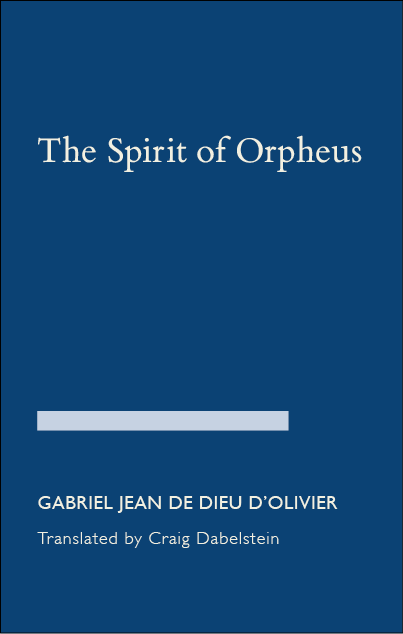
In The Spirit of Orpheus, Gabriel d’Olivier asks one of the oldest and most searching questions in musical thought: what does music do to the human being? First published in Paris in 1804, this remarkable dissertation treats music not merely as an art of pleasing sounds, but as a force acting upon the heart, the imagination, the body, society, morality, religion, and even the deepest structures of nature. For Olivier, music is a science of feeling: a language older than words, capable of consoling sorrow, awakening virtue, shaping public life, elevating worship, and restoring the troubled soul to a momentary sense of harmony.
Strange, ambitious, speculative, and often profoundly humane, The Spirit of Orpheus belongs to a world in which music could still be discussed alongside philosophy, medicine, theology, politics, mathematics, and natural science. Modern readers may not follow Olivier in every conclusion, but his central insight remains strikingly alive: music is not a luxury added to life, but one of the means by which life becomes bearable, intelligible, and humane. This first English translation by Craig Dabelstein brings a forgotten voice in the philosophy of music back into circulation, inviting musicians, teachers, conductors, scholars, and thoughtful listeners to reconsider the moral and emotional power of the art they love.